5 Performance
5.1 Type-آزمون
All FIBC types shall be subjected to the tests as follows:
a) cyclic top lift;
b) compression/stacking test.
At least three نمونه آزمونs of each FIBC type shall be submitted for آزمون leading to certification. The
نمونه آزمونs shall tested as follows:
نمونه آزمون 1: cyclic top lift test using the FIBC having the shortest vertical dimension;
نمونه آزمون 2: cyclic top lift test using the FIBC having the greatest vertical dimension;
نمونه آزمون 3: compression test using the FIBC having the greatest vertical dimension.
To comply with this standard the three نمونه آزمونs shall withstand the tests.
When the FIBC type has only one fixed vertical dimension, only نمونه آزمونs 1 and 3 need be submitted, and tested to withstand the tests.
One tested نمونه shall be durably identified and retained for reference in any later complaint or arbitration.
The tests shall be carried out in a آزمایشگاه working under the operational provisions of EN 45001,
EN 45002 and EN 45003.
5.2 Preparation of FIBC for test
5.2.1 Filling
For both the top lift and compression/stacking test, the FIBC shall be filled to the level specified in
accordance with 4.3 by the manufacturer/supplier with a tolerance of 0 % and +5 % of that height. The
FIBC shall be filled with either:
a) a ماده, e.g. plastics granules, having the following mechanical properties:
bulk density, 500 kg/m3
to 900 kg/m3;
mesh size, 3 mm to 12 mm;
angle of repose, 30° to 35°;
or:
b) the actual contents to be carried, when these are known, and where their use will not itself be a hazard.
NOTE When option b) is chosen, the FIBC type is certified in relation to that specific product only.
5.2.2 Conditioning
The filled FIBC shall be conditioned before آزمون at ambient دما and relative humidity. However,
in the event of dispute, آزمون shall be carried out after conditioning under standard conditions of (23 ± 2) °C and (50 ± 5) % relative humidity.
5.3 Test requirements
5.3.1 Cyclic top lift test(s)
Cyclic top lift test(s) shall be carried out in accordance with annex B and the following criteria shall apply:
a) no breakage of any lifting devices to the extent that any of the lifting devices ceases to support its بار;
and
b) when tested with an inner liner, no protrusion of the latter beyond the outer surface of the FIBC, except
through the closure(s), where this is a design feature; and
c) no loss of contents; and
d) no deterioration of the body which renders the FIBC unsafe for transport or storage.
NOTE A slight discharge during the test, e.g. from closures or stitch holes, should not be considered to be a failure of the FIBC, provided that no further leakage occurs after the FIBC has been raised clear of the ground.
5.3.2 Compression/stacking test
The compression/stack test shall be carried out in accordance with annex C and the following criteria shall
apply:
a) no loss of contents; and
b) no deterioration of the body which renders the FIBC unsafe for transport or storage.
NOTE A slight discharge during the test, e.g. from closures or stitch holes, should not be considered to be a failure of the FIBC, provided that no further leakage occurs after the FIBC has been raised clear of the ground.
Annex A
(normative)
UV مقاومت test
A.1 General
مادهs often undergo rapid photochemical degradation under the influence of sunlight, unless they have been stabilized in a durable fashion. An accelerated ageing that simulates ageing caused by sunlight may be brought about by irradiation with light of a UV type. نمونهs cut from the بار bearing مادهs of the FIBC, e.g. fabric, webbing, rope, sewing thread, glues, are subjected for a certain period of time to irradiation from a light source of the UV type with specified spectral distribution. A number of factors of uncertainty are inherent in the procedure, so comparisons should be available between the method used and exposures in the environment in which the product is to be used.
NOTE 1 Certain types of UV stabilizing additives are rapidly leached out, especially in an alkaline
environment, which should be taken into consideration in applicable situations.
NOTE 2 The performance of UV stabilizing additives may be affected by colour and the type of pigment used. Therefore, each combination of UV stabilizing additive and pigment should be tested separately.
A.2 Principle
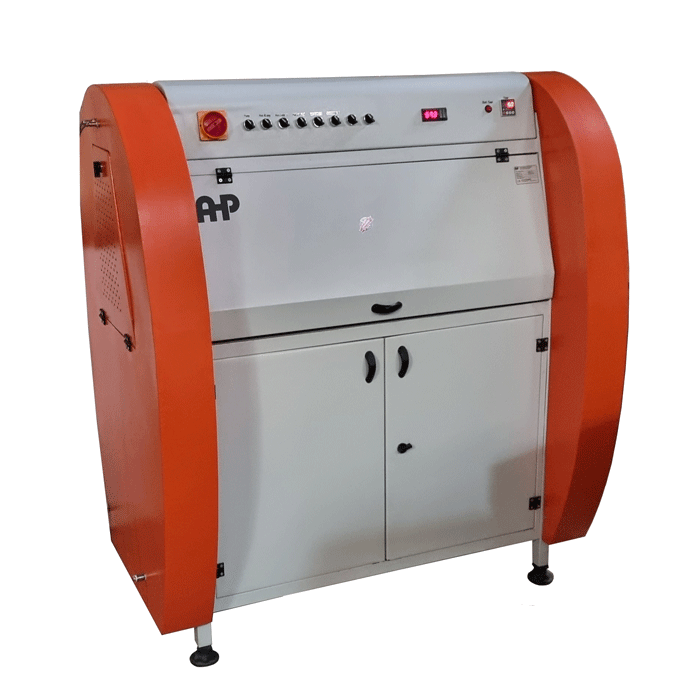
نمونه آزمونs are alternately exposed to UV light alone and to condensation alone in a repetitive cycle.
A.3 دستگاه
The apparatus should be in accordance with ASTM G154-98 [1] using a UV-B lamp.
A.4 روش اجرا
Expose a نمونه آزمون to a fluorescent UV lamp for at least 200 h using a test cycle of 8 h at 60 °C with UV radiation alternating with 4 h at 50 °C with condensation.
After exposure is complete, test the نمونه آزمون for breaking نیرو and elongation at break in accordance with ISO 5081 using the conditioning requirements as described in 5.2.2. Compare the values with results
performed on simultaneously cut نمونه آزمونs that have been stored under dark and cool conditions.
A.5 Expression of results
Express the results for breaking نیرو in Newton’s on نمونه آزمونs tested before and after exposure to the UV radiation.
Annex B
(normative)
Cyclic top lift test
B.1 Principle
The filled FIBC is suspended by its lifting devices with a flat فشار plate positioned on top of the contents.
This is done in one of two alternative ways:
a) the فشار plate is restrained either from above or below. The FIBC is suspended from a frame to
which an upward نیرو is applied progressively against the مقاومت of the فشار plate; or
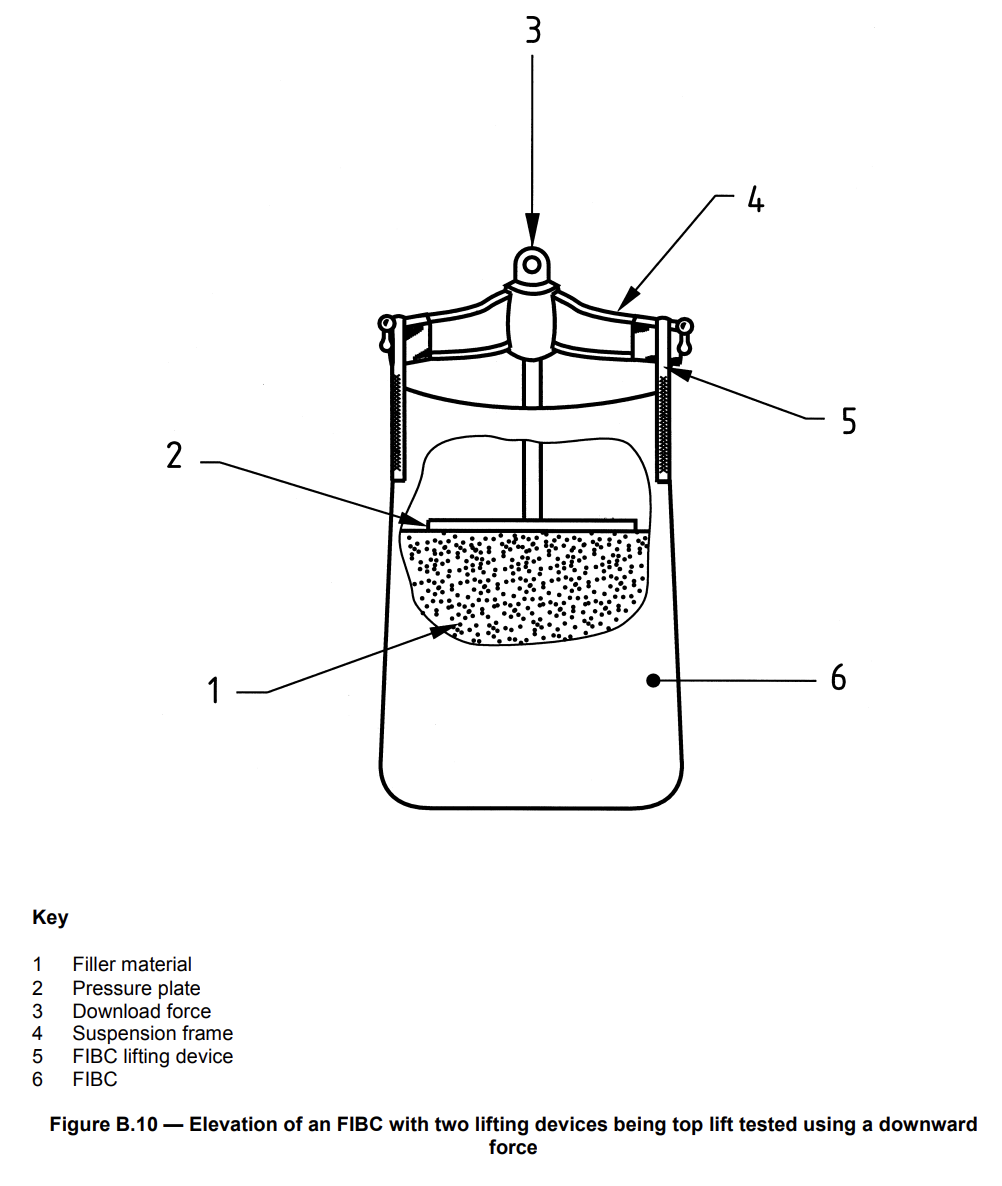
b) the FIBC is suspended from a frame fixed at the time of test then a downward نیرو is applied
progressively to the فشار plate.
The filled FIBC is subjected to a repeated بارing, unبارing, and dwell cycle. The نیرو is recorded and the FIBC is observed for breakage of any lifting device, other damage, or leakage of contents.
B.2 دستگاه
B.2.1 The فشار plate shall be flat except that flanges may be fitted to its underside to prevent lateral
displacement. The plate shall be of such a size that it covers between 60 % and 80 % of the surface area of the contents.
B.2.2 The suspension frame shall be such that, during the test, the filled FIBC can be suspended clear of
the ground with its lifting devices positioned as recommended by the manufacturer. For FIBCs designed for four point lifting, the suspension frame shall have the cross section shown in Figure B.1. For FIBCs
designed for single point lifting, the suspension frame shall have the cross section shown in Figure B.2. For FIBCs designed for two point lifting, the suspension frame shall have the cross section shown in Figure B.1 or B.2.
B.2.3 The means of applying the نیرو (upward or downward) shall be:
a) capable of at least the required test بار;
b) capable of a rate of (70 ± 20) kN/min;
c) fitted with a means of registering the applied نیرو.
B.2.4 The suspension frame, the فشار plate (and any restraint used for the latter) shall be capable of
resisting the نیروs applied during the test with minimal deformation.
B.2.5 دستگاه for use when an upward نیرو is applied.
B.2.5.1 دستگاه of the appropriate type illustrated in one of Figures B.3 to B.9 shall be used for FIBCs
being subjected to top lift آزمون using top or base restraint and an upward نیرو as in B.1 a).
Figure B.3 Perspective view of an FIBC with four lifting devices using top restraint.
Figure B.4 Elevation of an FIBC with two lifting devices using top restraint.
Figure B.5 Elevation of an FIBC with the lifting devices formed by extensions of the body and using top
restraint.
Figure B.6 Elevation of a single-point lift FIBC with base restraint using one member restraining the
فشار plate.
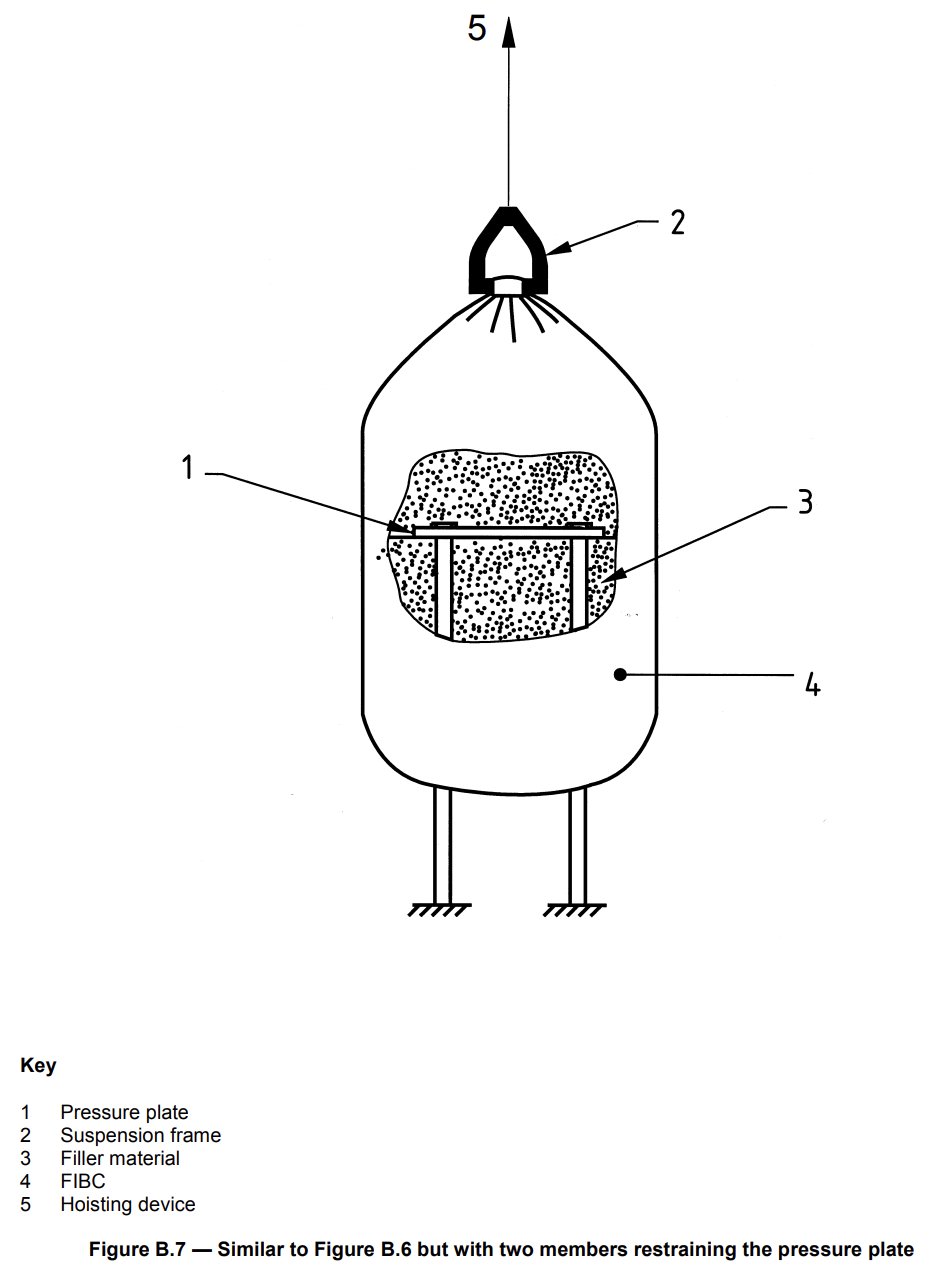
Figure B.7 Similar to Figure B.6 but with two members restraining the فشار plate.
Figure B.8 Elevation of an FIBC with two lifting devices using base restraint and one member restraining
the فشار plate.
Figure B.9 As Figure B.8 but with two members restraining the فشار plate.
B.2.5.2 Use of the apparatus illustrated in Figures B.6 to B.9 with base restraint involves connections
passing through the body of the FIBC and its test contents. Rods are a suitable method of making such
connections. Considerable care shall be taken:
a) with woven fabrics that the threads shall be separated rather than be cut to permit passage of a rod;
b) to ensure that any rod passes through the base no closer than 20 mm to any base seams or joins.
When, as with an FIBC having a seam or join running across the centre of the base, a single rod would
need to pass within 20 mm of a seam or join then two rods should be used as shown in Figures B.7 and
B.9.
NOTE It is recommended that:
a) a conical adaptor be screwed to the top of any restraining rod and removed once the FIBC is in position for test;
b) nuts be used to connect the rod(s) to the فشار plate and to a restraint.
B.2.6 دستگاه for use when a downward نیرو is used.
دستگاه of the type illustrated in Figure B.10 shall be used for FIBCs being subjected to top lift آزمون
using a downward نیرو as in B.1 b).
B.3 روش اجرا
B.3.1 Select, fill and condition each FIBC for cyclic top lift آزمون in accordance with 5.1, 5.2 and 5.3.
NOTE Any top panel not designed to contribute to the overall strength of the FIBC may be removed to allow the entry of the test apparatus. The area removed should be the minimum commensurate with efficient operation of the test apparatus.
B.3.2 Select any appropriate size of فشار plate in accordance with B.2.1 and position it above the
contents. This size shall be sufficiently small, and the positioning such, so that there will be no contact
between the edge of the plate and the ماده of the FIBC during the test.
B.3.3 Apply upwards or downwards نیرو as appropriate. Increase the نیرو at the rate of
(70 ± 20) kN/minute until the total نیرو equivalent to the specified test بار is registered. Remove the
applied نیرو.
Allow a dwell period of not more than 30 seconds before repeating the cycle. Repeat the test cycle until the specified number of cycles has been completed. Carry out a further test cycle to the appropriate بار
specified for the final test cycle.
Use the appropriate cycle from the following:
Heavy-duty reusable FIBC types: 70 cycles at a test بار of 6 x SWL and a final cycle at a test بار
of 8 x SWL.
Standard duty reusable FIBC types: 70 cycles at a test بار of 4 x SWL and a final cycle at a test بار
of 6 x SWL.
Single-trip FIBC types: 30 cycles at a test بار of 2 x SWL and a final cycle at a test بار
of 5 x SWL.
NOTE After this test is complete, further بارing may be applied until failure of the FIBC, to provide additional information. When this is done, the بار at failure should, together with other relevant test observations be recorded in a test report. There is no requirement, however, for the بار at failure, if it is greater than the specified test بار, to be noted in the certificate or reflected in the marking of the FIBC.




Annex C
(normative)
Compression/stacking test
C.1 Principle
The filled FIBC is بارed to the specified test بار using either a compression tester or a dead بار and, at
the end of the test period, is checked for loss of contents and for deterioration of the body which renders the FIBC unsafe for transport and storage.
C.2 دستگاه دستگاه described in ISO 2872 or ISO 2874 or a flat plate with the appropriate dead بار.
C.3 روش اجرا
Fill and condition the FIBC under test in accordance with 5.2.1 and 5.2.2. Use the method described in
ISO 2872 or ISO 2874, as appropriate, or apply the بار by appropriate weights بارed to a flat plate placed on top of the FIBC.
C.4 Calculation of the بار to be applied
The بار to be placed on the FIBC shall be 4 times its SWL. The compression بار of 4 times SWL shall not
be taken as the allowable stacking بار in service. Other factors that affect stacking are the actual contents used in service, FIBC dimensions and design, stacking method etc.
C.5 Duration of the test
The duration of بارing shall be 6 hours.
C.6 Expression of results
Express the results of the test including whether loss of contents or deterioration of the body of the FIBC
occurred.
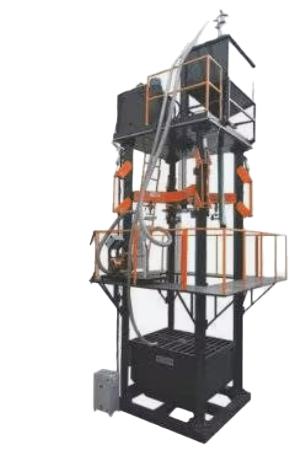
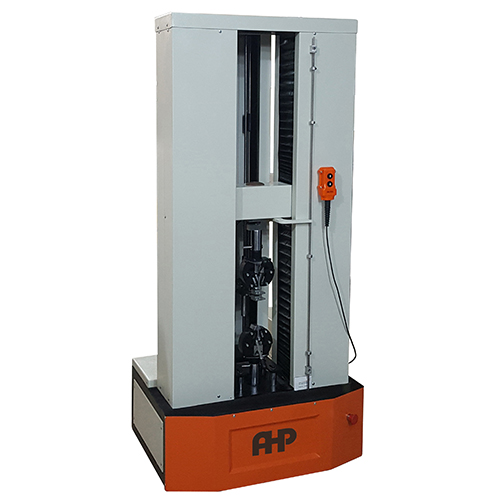
- Including test control panel
- Hydraulic نیرو application system
- 200 KN نیرو capacity (4*50KN بارcel)
- Hopper for نمونه bottom
- Filling system for نمونه piece
- Software is included
- Reporting in MS WORD
- Computer is included
- Hoppers for ماده reservoir will be as per customer request
- 7/24 online support